

Table of Content
- What Is SEO?
- What Is GEO in SEO?
- How SEO Works
- How GEO Works
- Frequently Asked Questions (FAQ)
- Conclusion
For years, Google has been serving as a bank of answers and a sea of solutions.
The process used to be simple: ask Google a question, get a list of links, click, and find answers.
To ensure their websites were seen and delivered answers matching user intent, businesses upscaled their content game, often partnering with the best SEO company in India to navigate these competitive rankings. They obsessed over the SEO process and rankings, knowing that if their site showed up on the first page, they won.
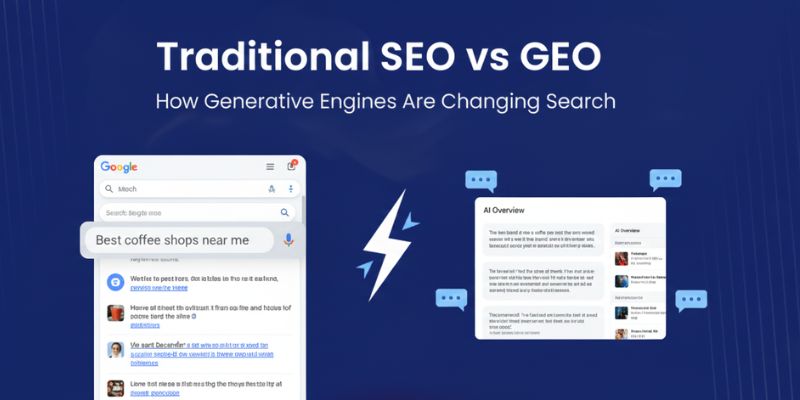
Now, generative AI integrates into this process, acting as an interpretive layer between the open web and users. When you ask Google a question, AI readily provides you with finely framed instant answers with zero clicks. GEO arrived in full swing, an entirely new concept changing the dynamics and definition of visibility.
So, before you misinterpret GEO as a superior one or SEO taking a backseat, hold on because there’s a lot to unfold. Let’s get into the basics, because the battlefield is not just about the websites; it’s about Google and its own answers. Let GEO vs SEO clear the air.
Key Takeaways: GEO vs SEO
📌 SEO fights for clicks; GEO fights for citations.
📌 SEO targets the search engine algorithm; GEO targets the Large Language Model (LLM).
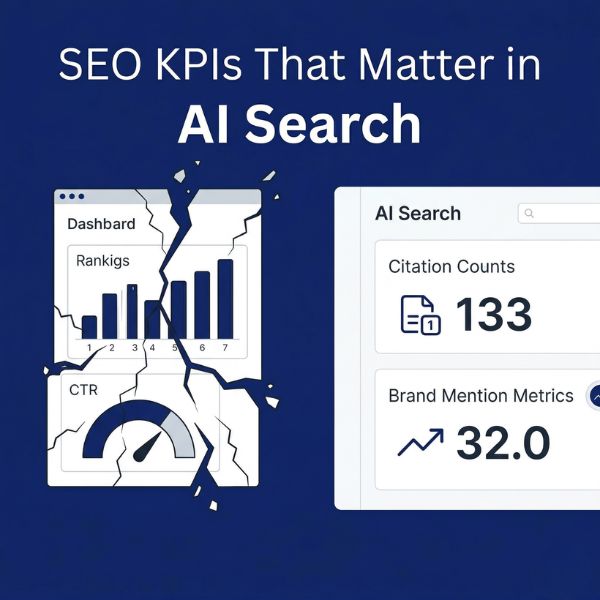
📌 SEO success is measured by traffic; GEO success is measured by brand mentions.
What Is SEO?
Search engine optimization (SEO) is the process of improving a website’s structure, content, and visibility to attract organic traffic from search engines like Google to make it easier for users to find relevant information, services, or products.
The purpose of SEO is to connect what people are searching for with the most pertinent and valuable content. It’s about optimizing your content by meeting the algorithm criteria by improving your site’s technical aspects, content, and user experience to rank higher in traditional search engine results.
What Is GEO in SEO?
GEO, LLMO, AEO, or just SEO-keeping aside the acronym, the goal is to make your content the favored source in AI models like ChatGPT, Perplexity, or Gemini to either summarize, cite, or directly use it in the conversational answers.
It focuses on content structure, clarity, context, and authority instead of just keywords to secure mentions in AI summaries. To ensure these AI models can efficiently access your data, understanding files like robots.txt is standard, but understanding what llms.txt is becoming equally critical for future-proofing your content visibility. The search engines transcend simply retrieving information, and they generate comprehensive responses by combining information from multiple sources.
AI search is growing as a complementary discovery channel to traditional search, only to enhance SEO, making sure that your content isn’t just found but is used in answers and not as a replacement.
How SEO Works
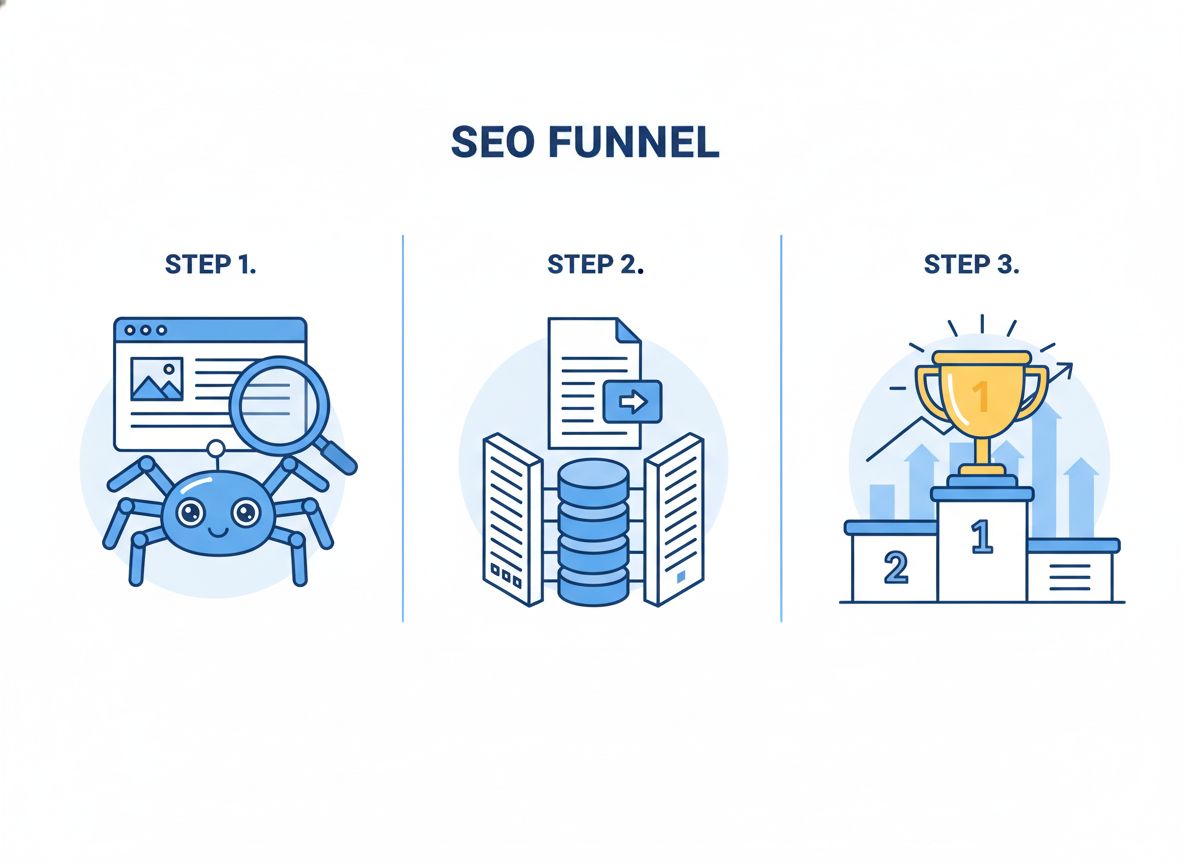
- Crawling: When someone types a query in Google, the search engines crawl via bots to discover your pages.
- Indexing: Once the bot analyzes the page’s content, code, and structure, the analyzed information is then stored in search engines’ massive databases called indexes, categorized by keywords and other data.
- Ranking: Then it ranks the pages based on trust, quality, authority, and relevance. The core of SEO consists of on-page SEO, off-page SEO, and technical SEO. Regular maintenance, such as performing a technical seo audit , is essential to ensure search engine bots can crawl and index your pages without errors.
In simple terms, SEO helps search engines become aware that your site exists and understand your content to show it to the right people at the right time.
How GEO Works

Generative engine optimization is how you shape your content so that AI-driven platforms can easily use it in their answers. These platforms synthesize with large language models to generate responses, extracting sources they trust to give you instant answers instead of providing a list of website links.
SEO does all the hard work to make your content rank higher so that people click your link. In contrast, knowing how to rank in AI overview requires a strategy where AI fetches, validates, and explicitly cites your content as a trusted source.
AI reads and understands your content and prefers well-sourced, clear-cut statements over fluff. As it summarizes content from multiple sources, it enables your content to be structured, making it easy for them to parse.
It gauges the experience, expertise, authority, and trustworthiness of the site, and even if people don’t visit your site directly, it still gets quoted. GEO ensures your content still matters in a zero-click world.
| GEO | SEO | |
| Definition | GEO is the process of optimizing content in a way that the AI-powered search engines like ChatGPT or Google’s generative AI can include, summarize, and cite it in AI-generated answers. | SEO is the process of making our site more visible and higher ranked on search engines for relevant searches, attracting clicks, and increasing organic traffic. |
| Primary Goal | To get your content cited and featured in AI-generated responses, ensure that your content is used as a trusted source in AI-generated answers, even with zero clicks. | Improving visibility and ranking on search engines to increase relevant, high-quality organic traffic to a website. |
| Content Range | GEO doesn’t own the content, but it can pull, summarize, and highlight information from anywhere as the AI engine fetches information from across the entire web, including the places you cannot directly control or own. | Traditional SEO focuses heavily on owned assets like your website, your landing pages, and your blog. You can control the content, optimize its keywords, and build backlinks to boost authority. |
| User Interaction | Delivers users clear AI-generated answers with a citation or direct link to your site. | Relies on users to click the links to your site, read the page, and interact with the website. |
| Technical Requirements | The technical requirements of GEO focus on content authority, clarity, technical SEO health, and structure for AI to understand, synthesize, and trust your information for direct answers. E.g. Headings, lists, Q&A sections, summaries, and clear definitions. | Mobile friendliness, site structure & architecture, security, user experience, secured data, site speed, and performance, etc, are all the technical requirements of SEO. |
| Backlinks | Explicit entity mentions carry significant weight, even if they are without a backlink. Even an unlinked mention can influence generative visibility if it reinforces your brand’s association with a specific topic or use case. | Backlinks are the gold standard for authority. A link from a trusted domain signals to Google that your content is credible and worth ranking. |
| ROI | GEO’s success is measured by brand visibility inside AI conversations. It enhances brand visibility, authority, and credibility; it may not have clicks, but it increases recognition. | Clicks and last-touch conversions measure SEO’s success. You rank high, users click through to your site, and ideally, they convert. It’s a direct, measurable action. |
| Metrics of Success | GEO utilizes impression metrics, specifically measuring the visibility of citations, share of voice in AI answers, and relevance to the user query. | SEO relies on traditional metrics such as Click-Through Rate (CTR), bounce rate, conversion rate, and time spent on page. |
| Strategies | GEO strategies are not universal. They rely on how AI interprets, summarizes, and prioritizes different types of content across the web. | SEO strategies can be applied universally across almost all types of content |
Frequently Asked Questions (FAQ)
What is the difference between GEO and SEO?
The main difference lies in the goal. SEO focuses on ranking links on search engine results pages (SERPs) to drive clicks. In contrast, GEO (Generative Engine Optimization) focuses on optimizing content so AI models (like ChatGPT or Gemini) cite and summarize it directly in their answers.
Will GEO replace SEO?
No, GEO is not a replacement for SEO. They are complementary strategies. While GEO targets AI-generated summaries (zero-click searches), traditional SEO is still essential for navigational queries and deep-dive research where users want to visit a website directly.
How do I optimize for GEO?
To optimize for GEO, focus on authority and structure. Use clear headings, define complex terms simply, include data tables, and ensure your content is cited by other authoritative sources. AI models prefer content that is easy to parse and factually accurate.
What is GEO in search marketing?
GEO in search refers to the practice of tailoring content specifically for generative AI engines. It acts as the “new SEO” for chatbots and AI-integrated search engines, ensuring your brand remains visible even when users don’t click a link.
Conclusion
GEO isn’t a rival; it isn’t here to compete or push SEO aside. So the hype around GEO being revolutionary and a replacement for SEO is an oversimplification. Instead, GEO is here to enhance SEO by extending how optimized content is understood and used by AI-driven search.
Traditional SEO vs AI SEO isn’t a zero-sum game. They will coexist amidst these differences, and SEO will continue to be the cornerstone of how information is discovered, delivered, and evaluated.
As search evolves, adapting your strategy is key. At AONE SEO Service, we specialize in helping businesses stay ahead of this curve. Whether you need traditional strategies or cutting-edge LLM SEO services in India, our team ensures your brand remains visible in both search results and AI conversations.
Ready to future-proof your digital presence? Contact us today to start optimizing for the new era of search.